Five years curating analog photography in green. More than 1,500 photographers featured on the feed — many of them with fewer than a thousand followers.
mar–may 2026
the wordpress site
A theme of their own, versioned by hand from v68 to v83. It worked, but every editorial change went through code.
apr 2026
verdant, the print issue
121 submissions from over 30 countries became 72 pages. The first thing the magazine made that you could hold in your hands.
jun 2026
a home of its own
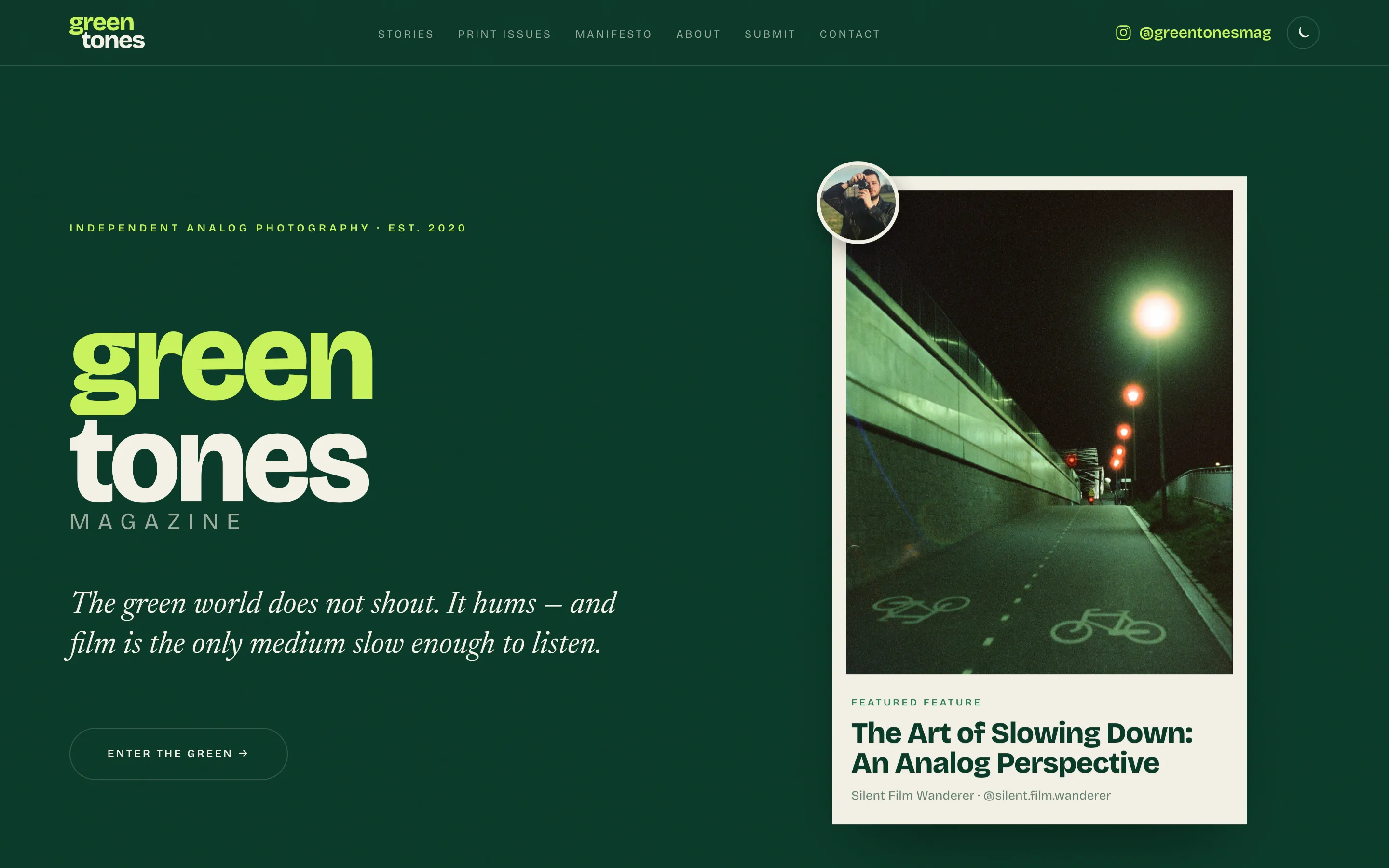
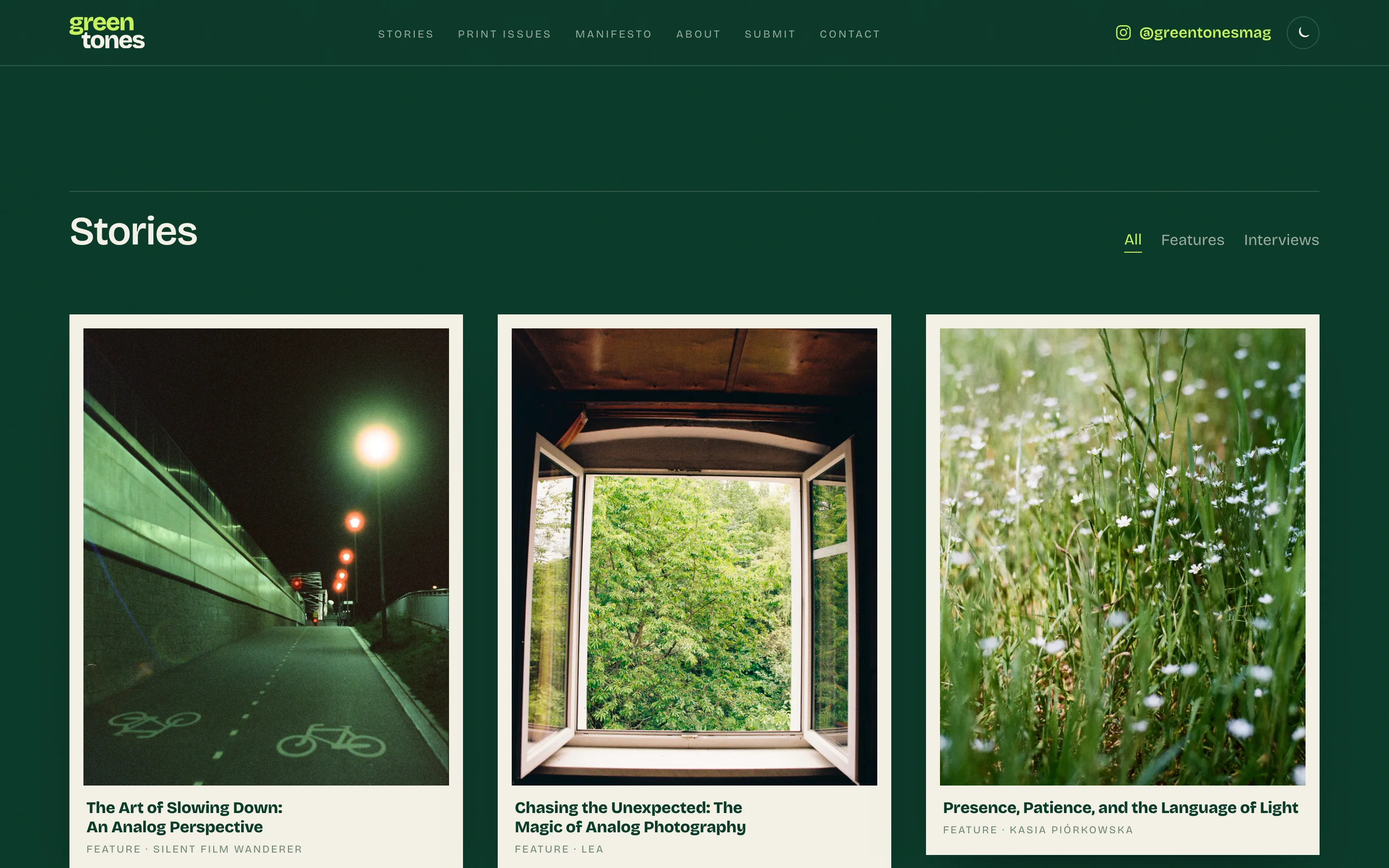
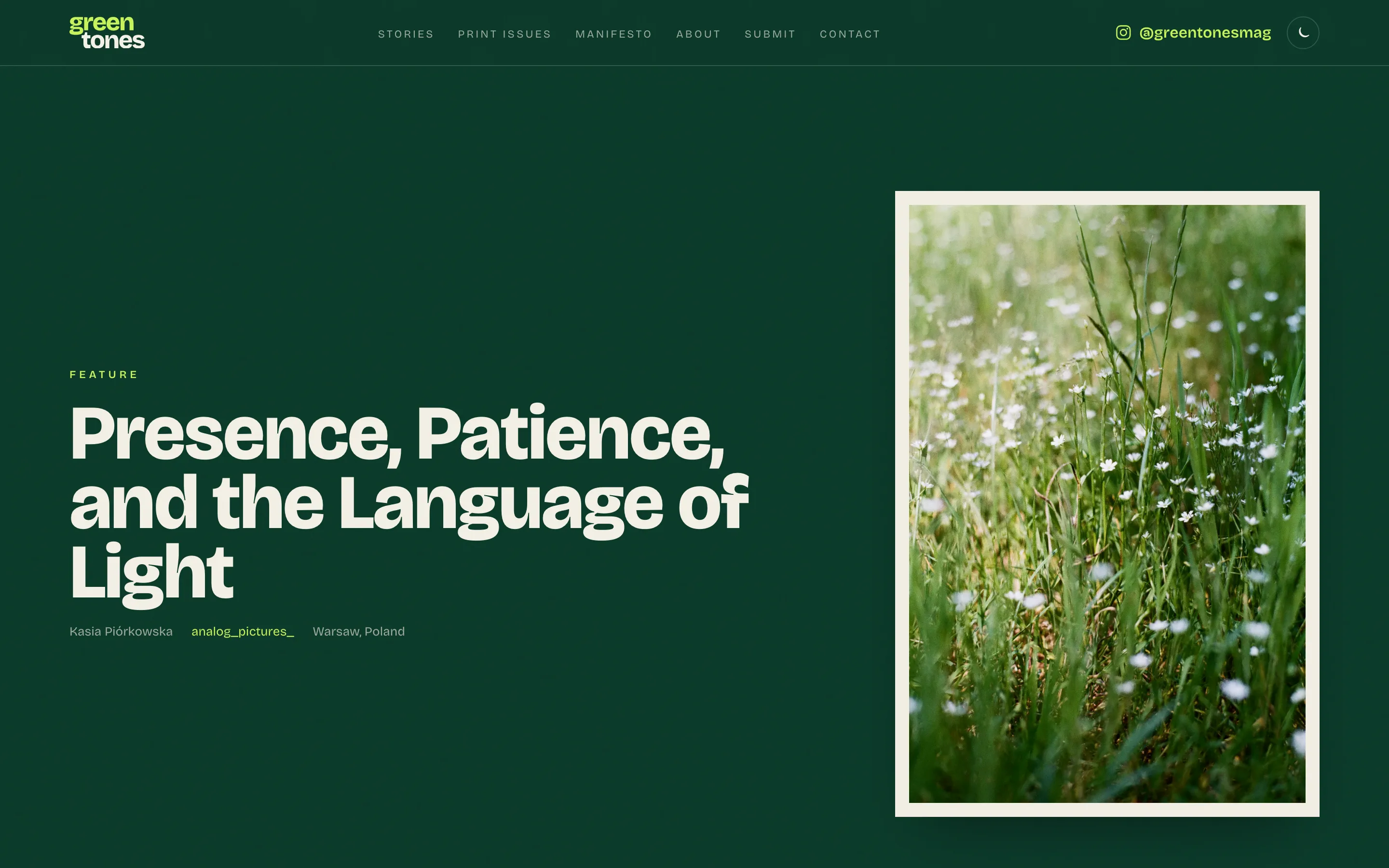
A static editorial site in Astro, with a CMS. The team publishes on its own and the archive finally belongs to the magazine.
The archive of features and interviews
A feature: room for the whole photo essay
The print issue page
the print issue
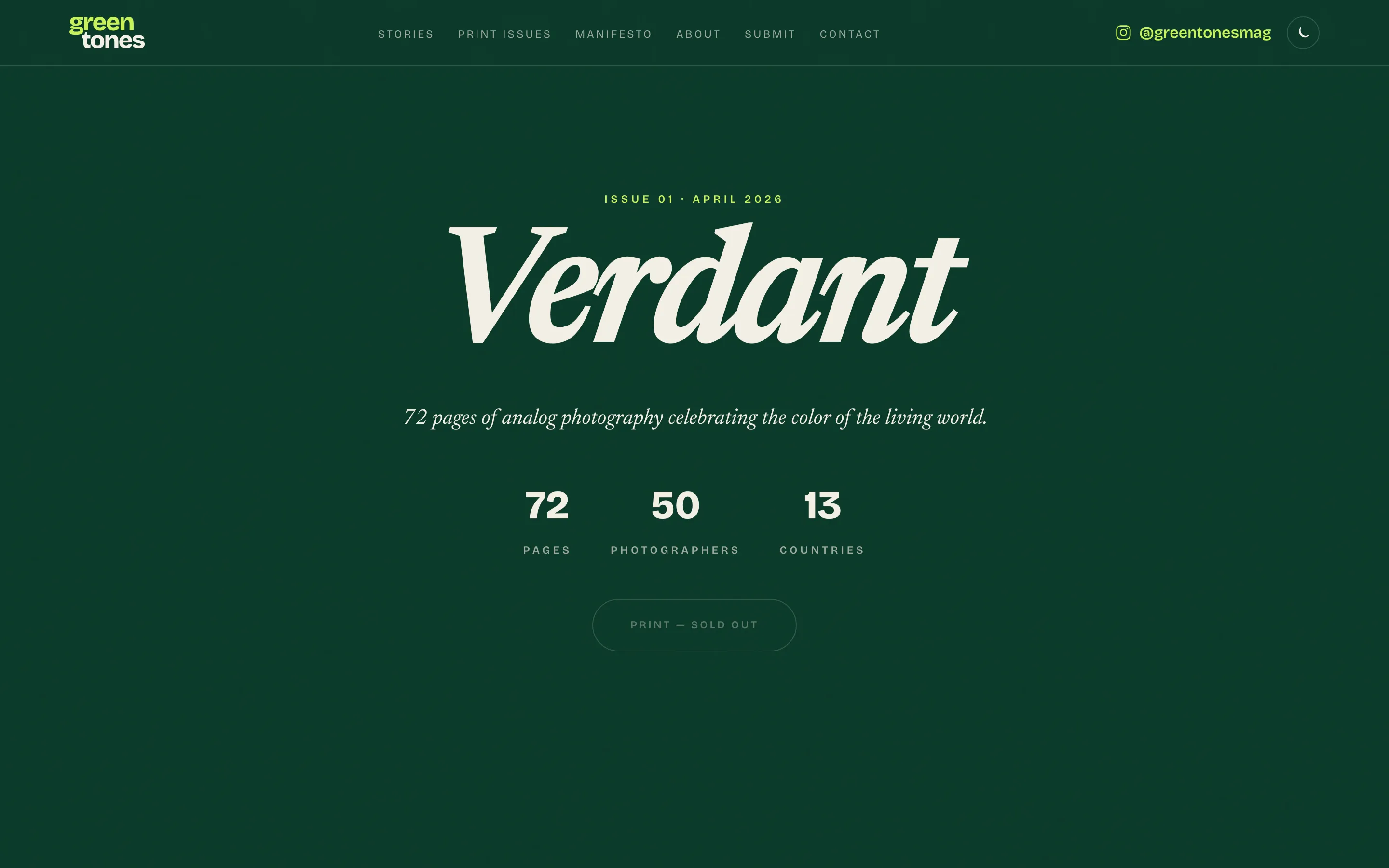
verdant
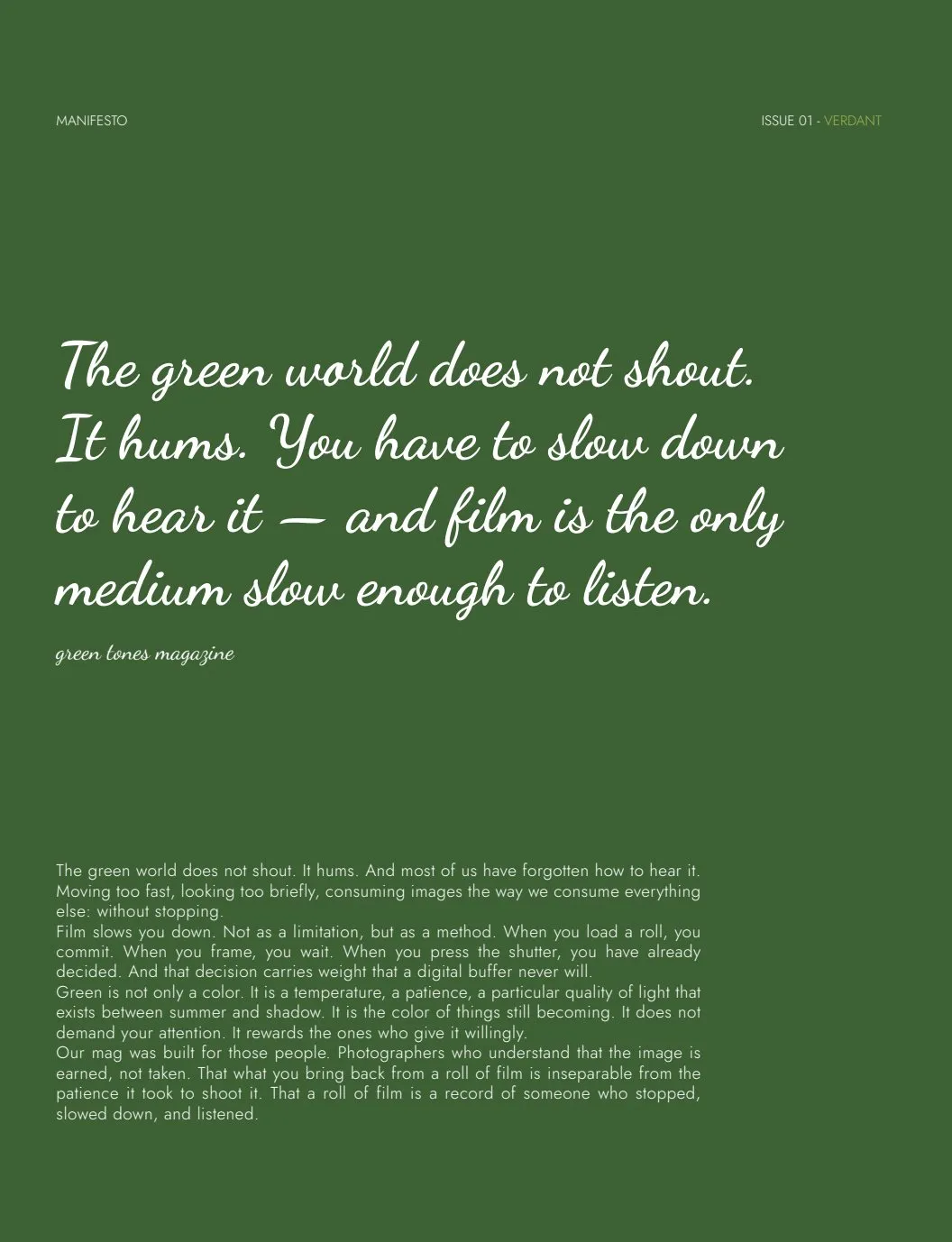
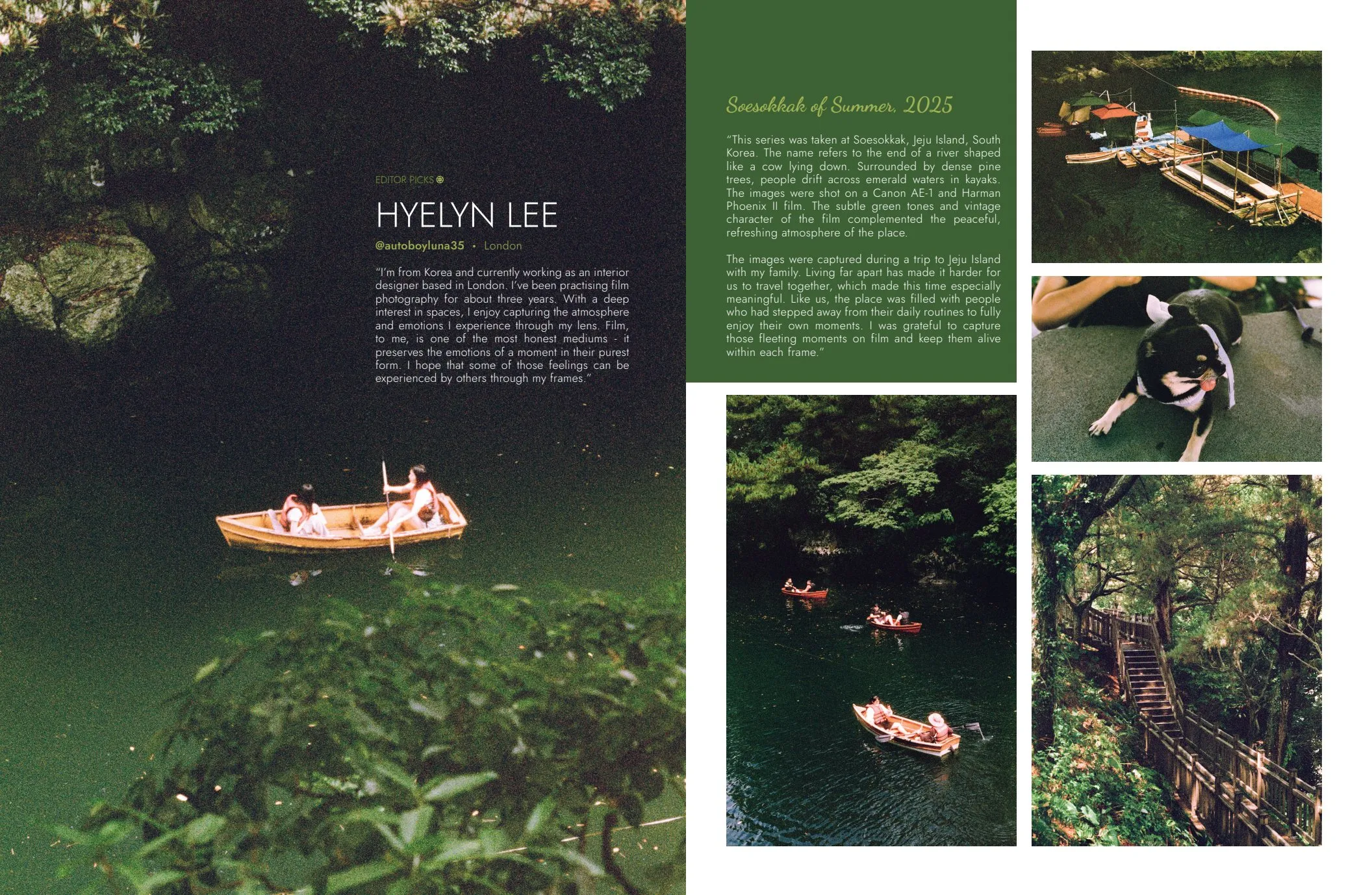
We laid out all 72 pages of Issue 01 in InDesign — cover, section openers, photography grids and the editorial text. The magazine was built before the site existed: it was the object the community had been waiting five years for.
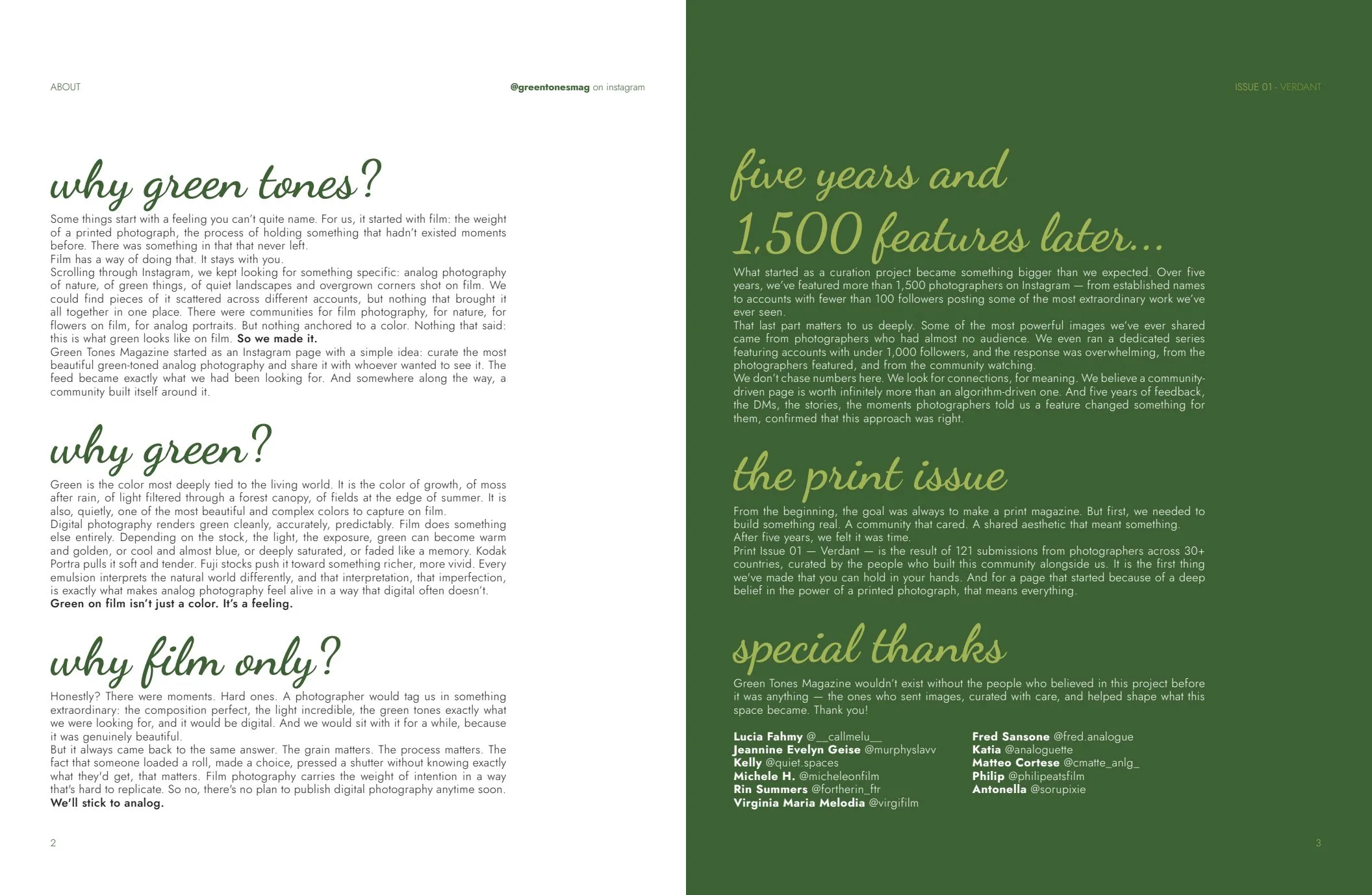
pl. 01p. 2–3
The editorial opener: three questions in a narrow left column, the flat green arriving only on the even page.
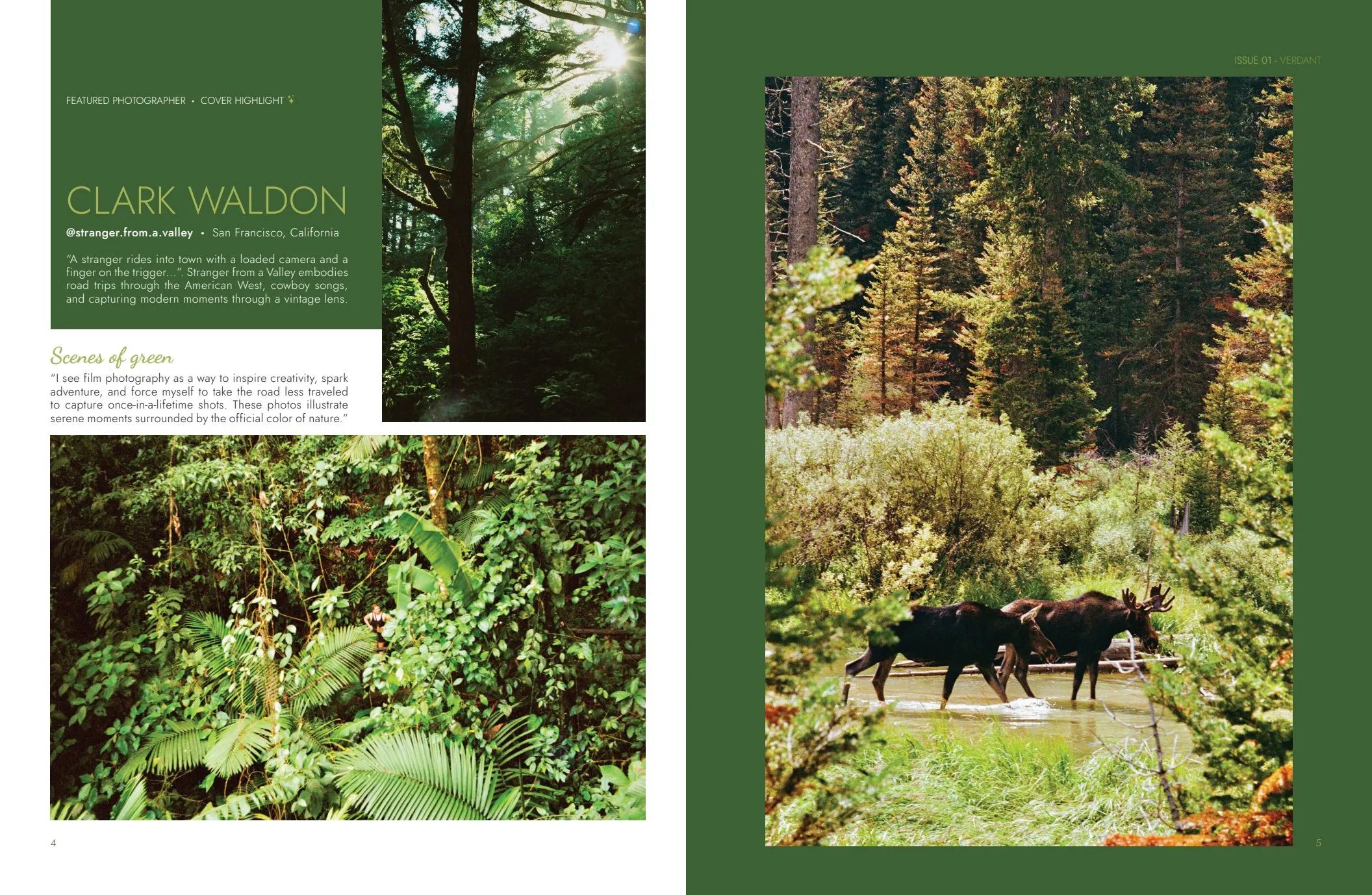
pl. 02p. 4–5
The cover photographer gets a full spread — text held to the left, the forest taking the whole right page.
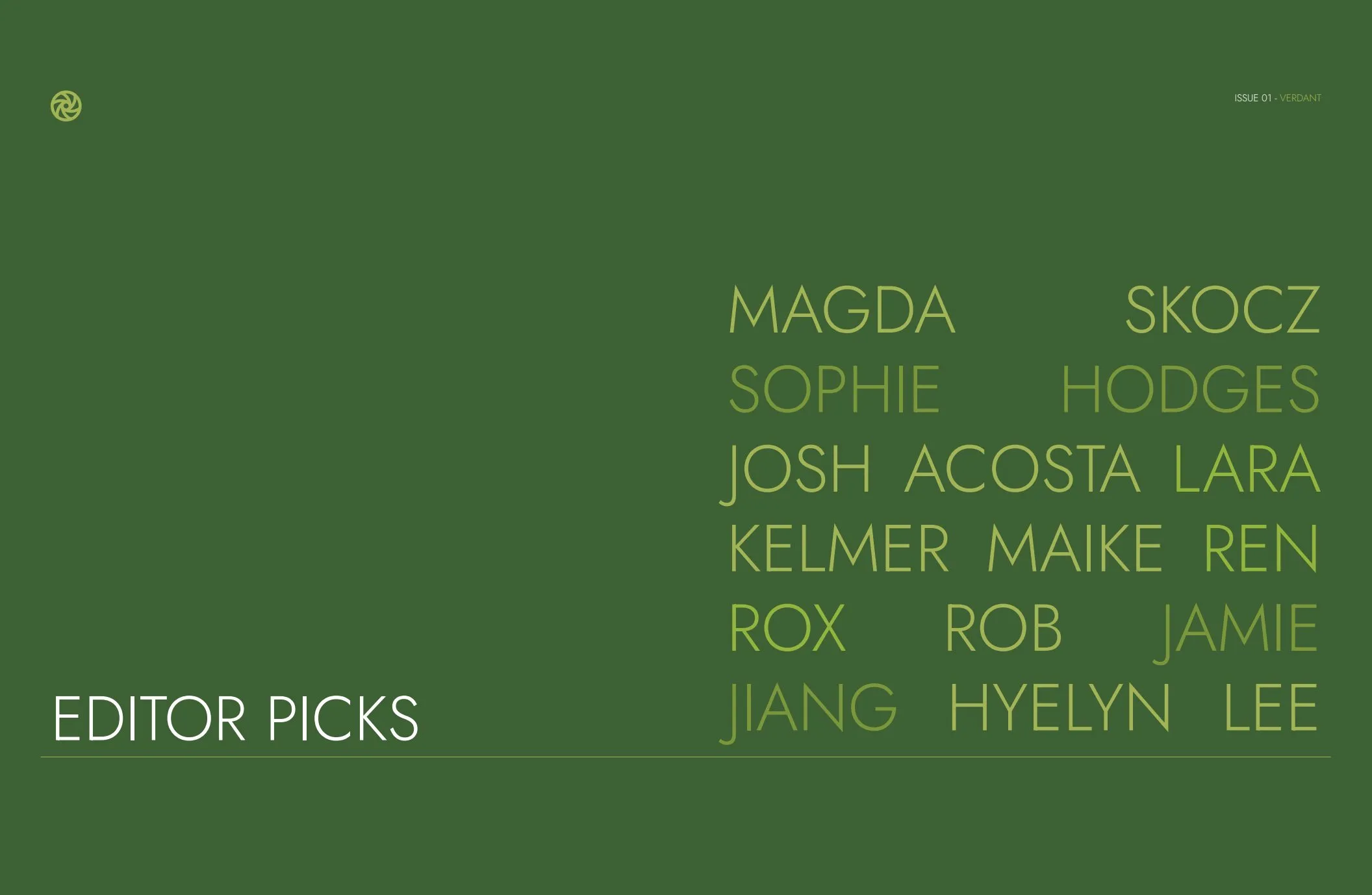
pl. 03p. 12–13
A section divider with no photograph at all: the names themselves compose the page.
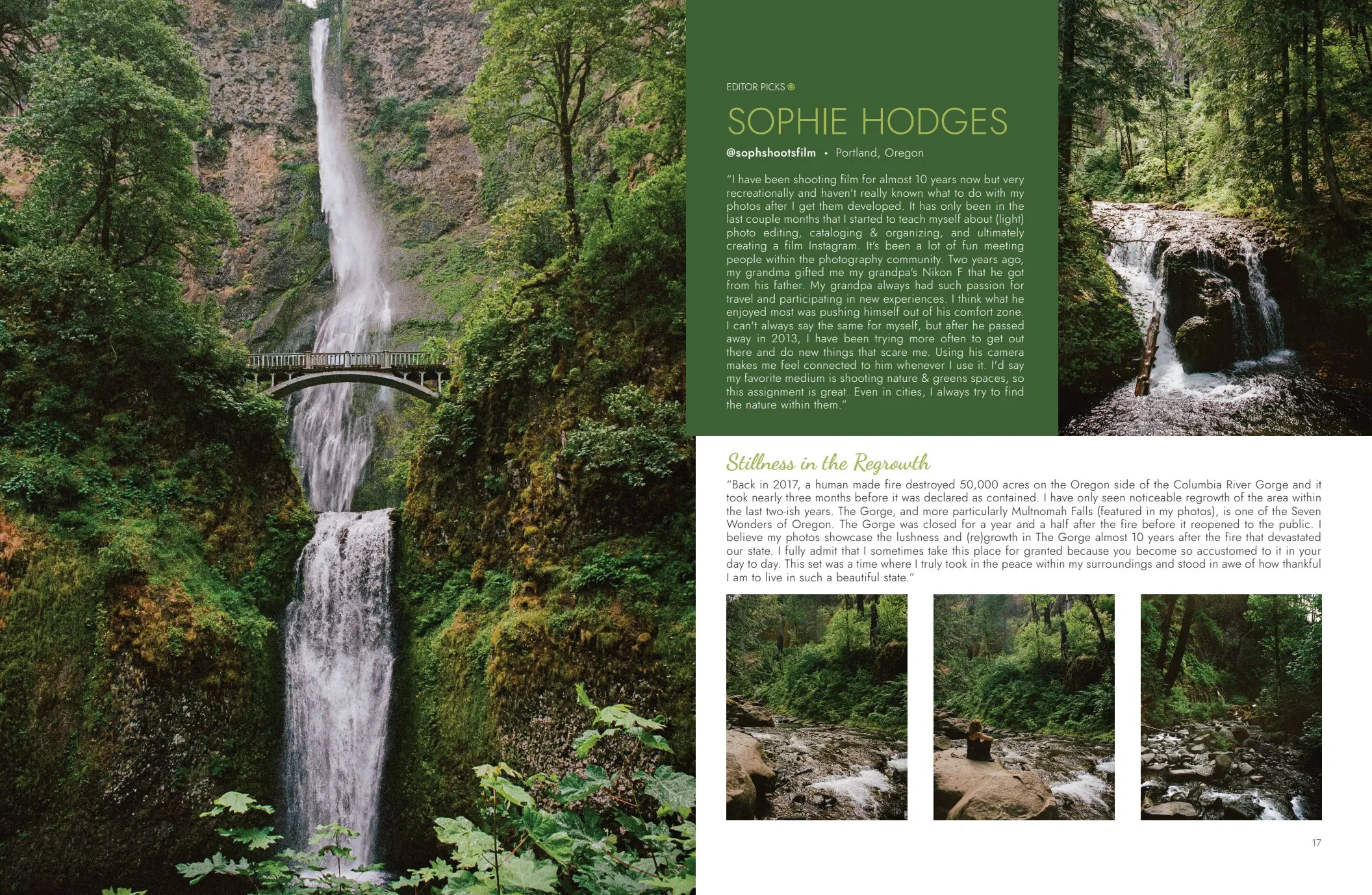
pl. 04p. 16–17
Full bleed against grid: the waterfall takes the entire page, the next one reorganises into blocks.
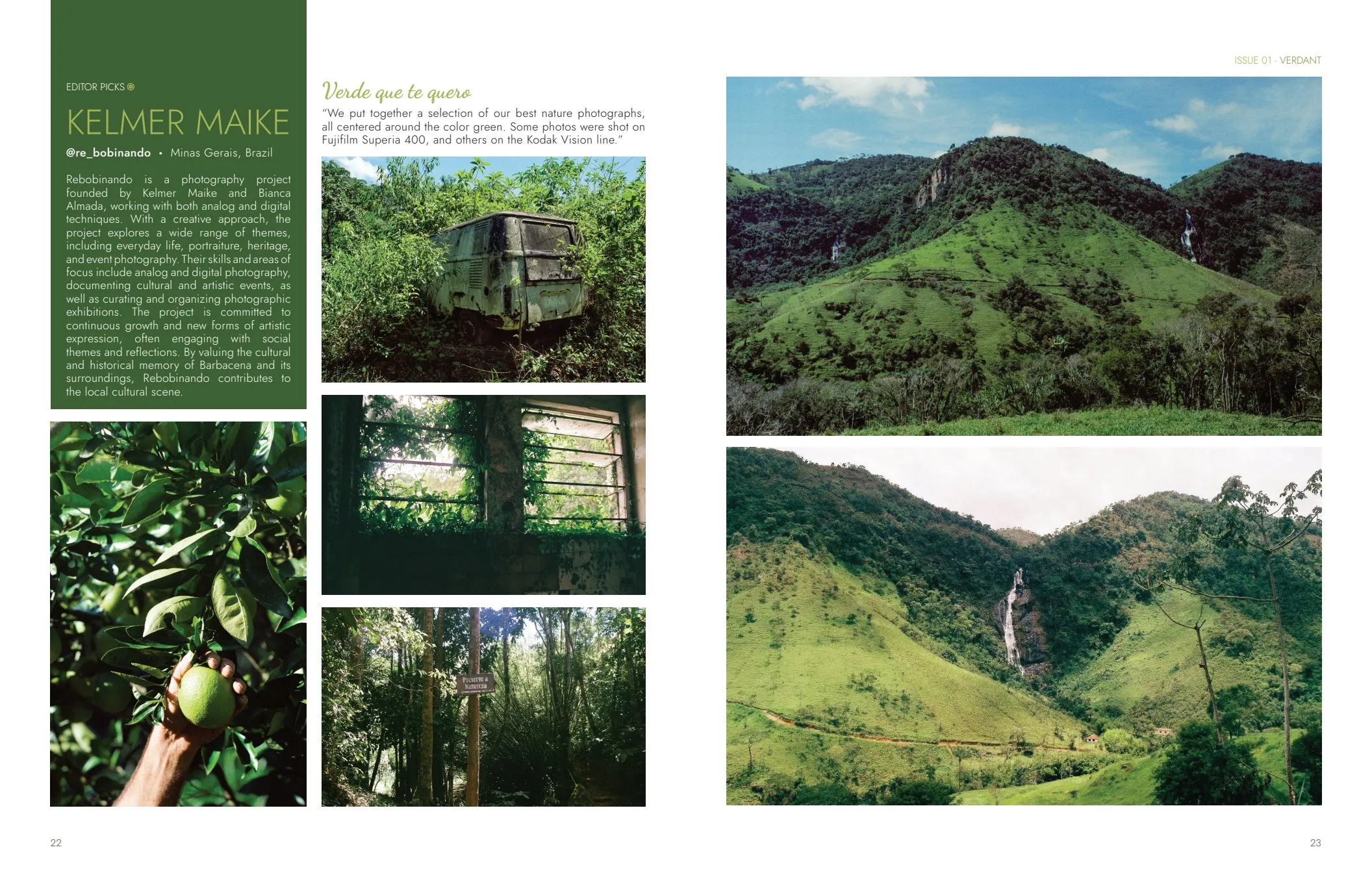
pl. 05p. 22–23
The densest grid in the issue — five photographs and a text column, none of them crowding.
pl. 06p. 30–31
The only colour inversion in the magazine: a dark ground to let the bright photograph breathe.
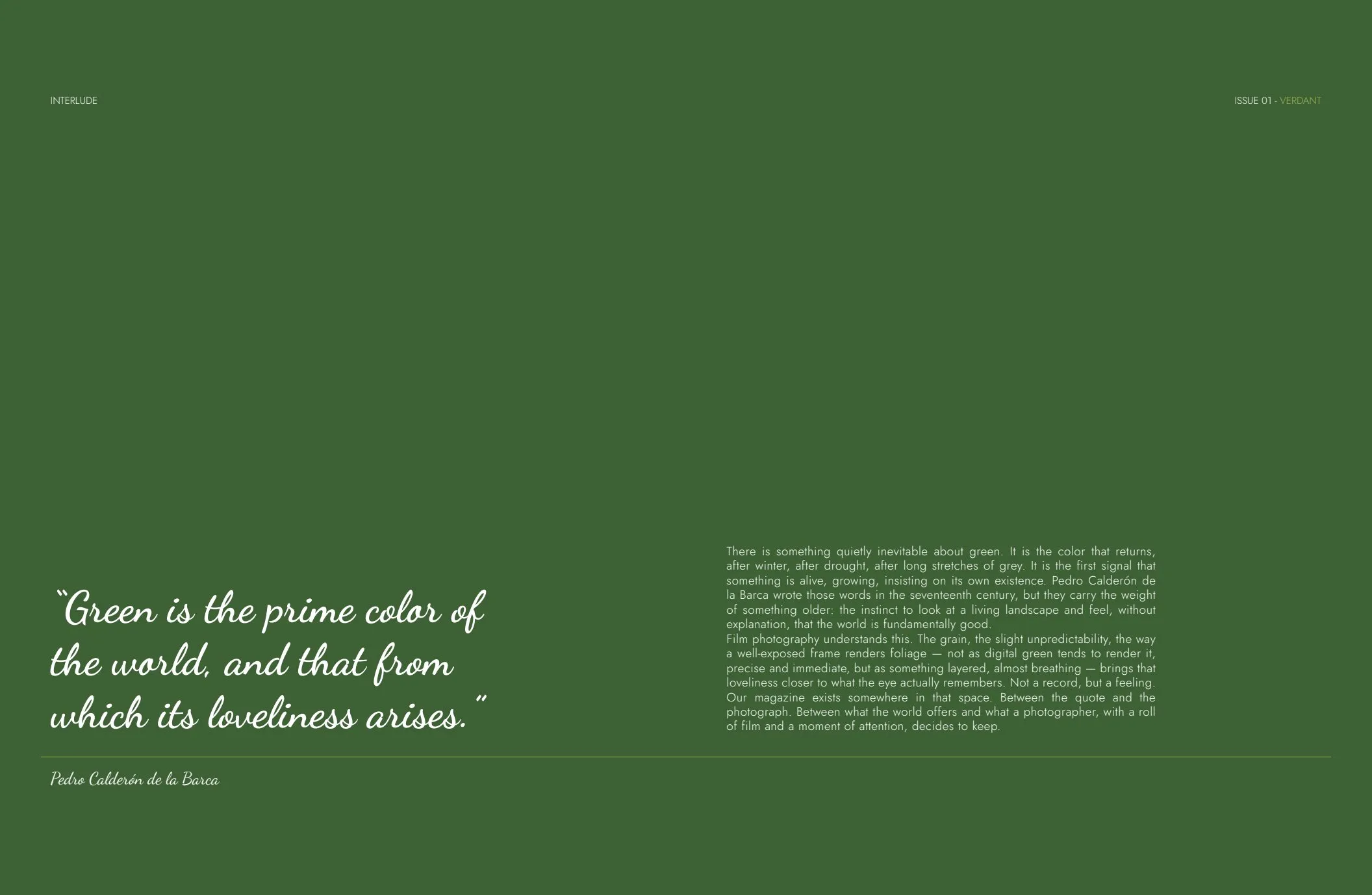
pl. 07p. 42–43
The quote alone on the page, filling the pause between two sections.
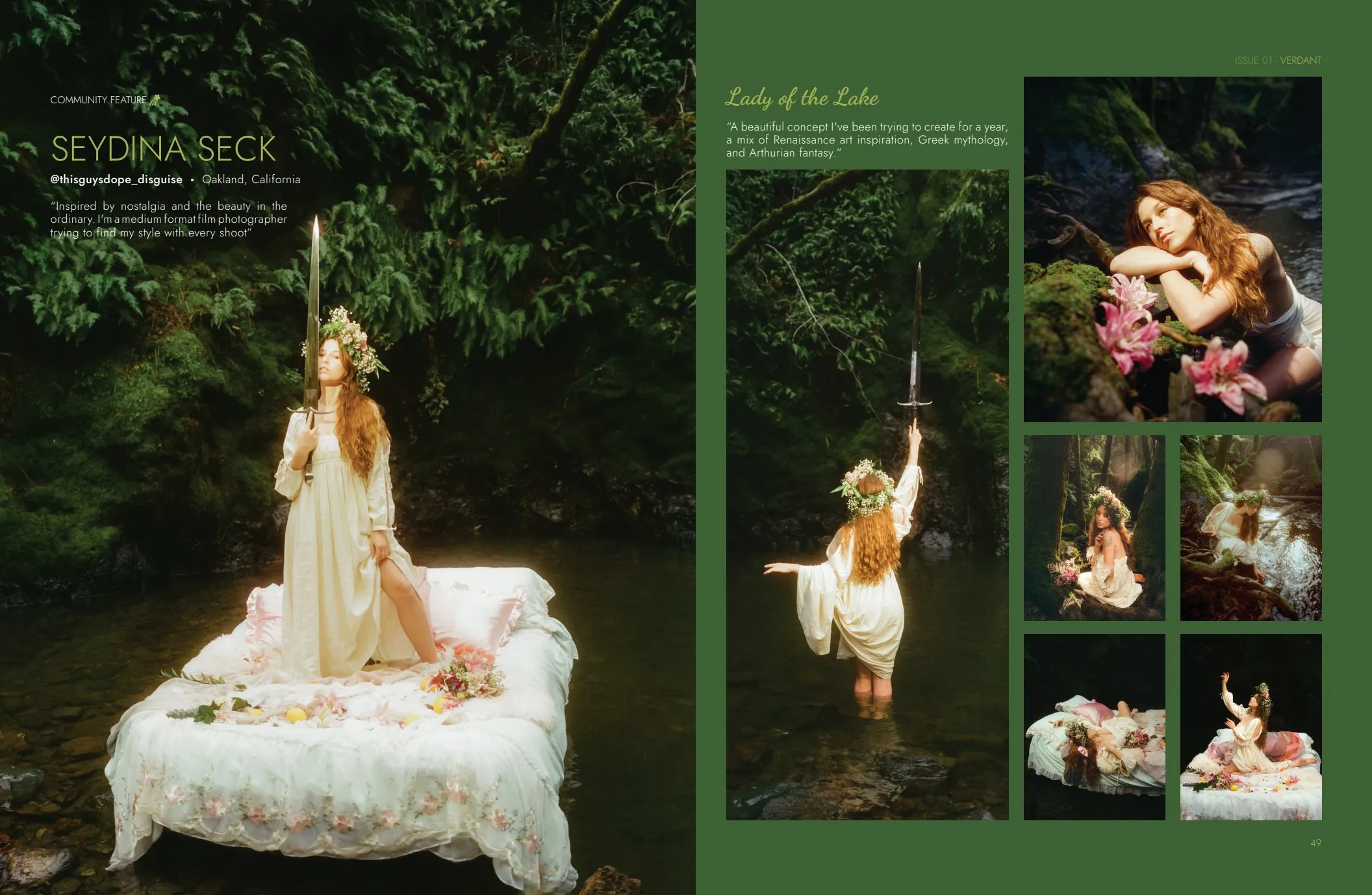
pl. 08p. 48–49
Community Features: the same structure as the picks, in another register — consistency without repetition.
72pages
121submissions
30+countries of origin
50photographers published
Layout, cover and artwork for Issue 01 — Luminee.
the result
The magazine is no longer just an Instagram page: it has its own address, a permanent archive and a home for the printed editions — publishing at its own pace.